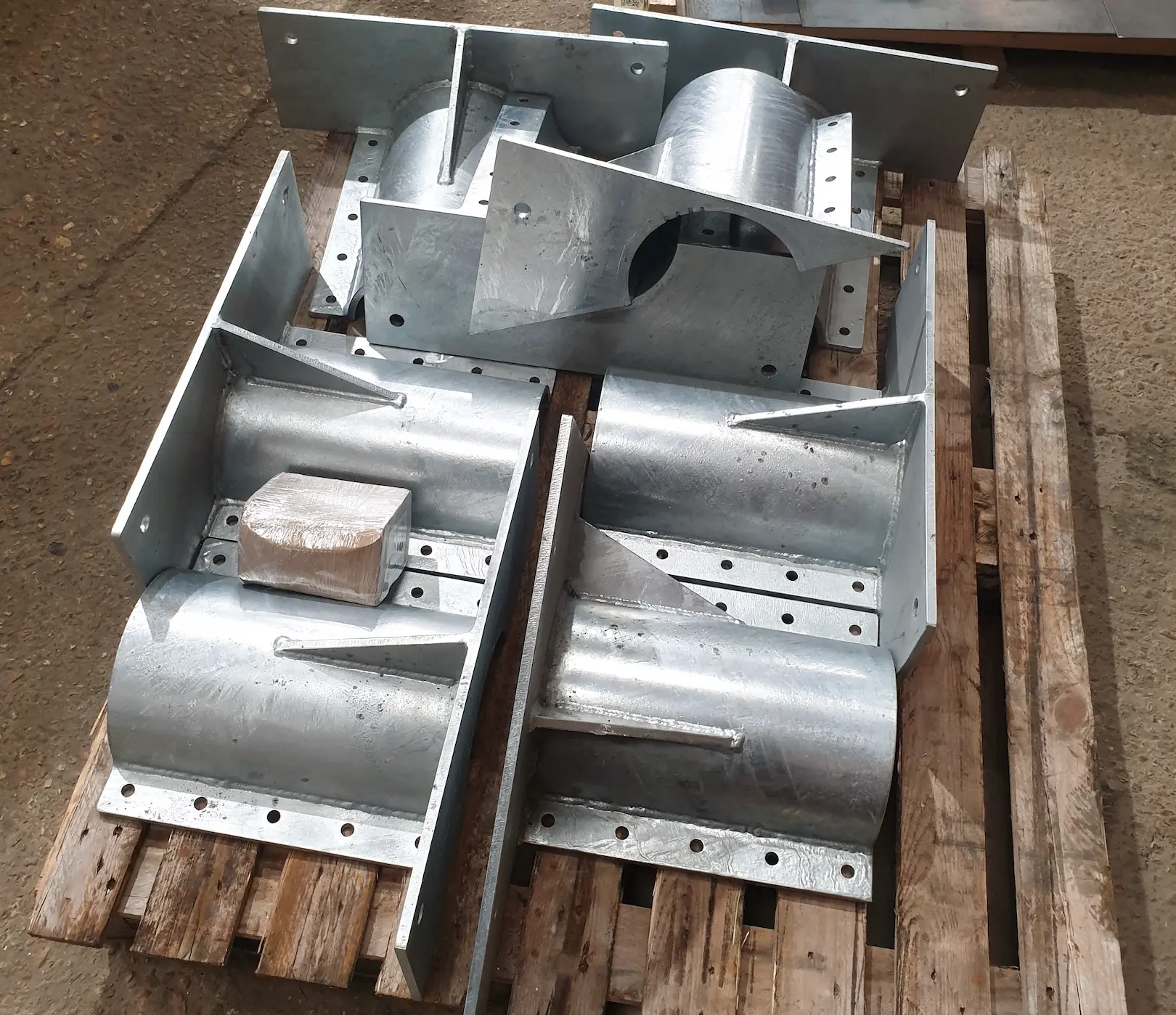
By Nick, Operations Manager at Formost Fabrications. Updated October 2026.
When it’s worth getting a custom bracket.
If a suitable bracket is available off the shelf, I would usually advise you to buy it. Having custom metal brackets made becomes worthwhile when you need a particular shape or fit that a standard part cannot provide.
Metal brackets are often a small part of a larger project, so they can be easy to overlook until something doesn’t fit. A fixing hole in the wrong place can hold up an installation, even when the rest of the work is ready.
At Formost Fabrications, we deal with bracket enquiries from a wide range of customers, from joinery companies and fitters, to factories adapting their equipment. The starting point is understanding where the bracket will go and what it needs to do.
When you need a custom metal bracket
Joinery companies often need brackets to connect their work together or fix it to the surface behind. Stone and marble suppliers come with support requirements, while builders might need stainless steel details to finish around a kitchen or adapt cooker hood ducting.
Fitters regularly encounter situations on site that need a particular shape to achieve a neat finish. A bracket may be largely hidden once installed, but its dimensions can determine whether the visible work fits properly.
There are industrial enquiries too. A factory might need a replacement for a broken production-line bracket, or new fittings after changing the arrangement of their equipment.
Choosing the material and finish
Much of the bracket work we deal with is in thinner material, generally 6mm or below, and more often 3mm or below. That can be mild steel, aluminium or stainless steel. Brass comes up occasionally.
Thickness alone does not establish whether a bracket is suitable. The application needs to be understood, including any load it must carry. We can discuss fabrication, but we can’t provide structural calculations or confirm a load rating – for that, you need a structural engineer, or a mechanical engineer, and we don’t have those services in-house.
The working environment also affects the specification. A bracket used around industrial cleaning chemicals needs different consideration from one fitted inside a cupboard. Any coating must be suitable for that exposure.
Brushed stainless steel is a common finish. Powder coating and specialist plating can be arranged with outside suppliers we work with. If a polished appearance is required, it is worth discussing that before manufacture. Some surfaces are easier to polish while the material is still flat, before it is formed – optimising some of these manufacturability issues early in the process helps keep your costs down and timelines quick.
Folded or welded?
In our workshop, material can be cut to size, drilled or punched, then formed on the brake press. Round holes and slots are common, with other shapes depending on the tooling available. Blanks can be laser cut if they are a complex part, although this is more cost effective for higher numbers of parts.
Folded metal brackets have a radius at the bend. That is easy to overlook if you have drawn a perfectly sharp corner, particularly when metal brackets need to fit closely around another component. Welding separate pieces together can allow a tighter corner, although it adds labour time. The weld needs cleaning up, and the heat can affect the angle or dimensions, which then need checking and correcting. I would rather talk through those clearances at the drawing stage than discover a problem when someone tries to fit the finished bracket.
What information to include in an enquiry
Drawing
CAD files are helpful, but a clearly dimensioned sketch can be enough to start a conversation. Include the material and thickness, along with the required finish and quantity.
Mark the hole sizes and positions, including the dimensions of any slots. Please also say whether your measurements are internal or external. Both are workable; the important thing is knowing which you mean.
If a dimension has very little room for variation, identify that tolerance. Holes close to a bend also need checking against the forming process and available tooling.
Quantity
Orders range from a single to several hundred metal brackets. With a one-off, interpreting the drawing and setting up the machines account for a sizeable part of the cost. That preparation is still needed for a small component.
For a batch, the setup cost is spread across more pieces, so the unit price generally comes down. Lead times depend on the specification and the workshop workload.
Discussing your bracket with Formost
Context
You do not need a finished CAD drawing to make an enquiry. A dimensioned sketch, with an explanation of where the bracket will be fitted, gives me something useful to work from.
If you have a job in mind, send the details to Formost Fabrications. I can talk through how the bracket could be made and check any clearances before the drawing goes to the workshop.
Summary
- Drawing
- CAD or sketch
- Overall dimensions (note whether these are internal or external)
- Hole sizes and positions
- Slot dimensions – if applicable
- Material (e.g. mild steel, stainless 304)
- Finish (note intended environment e.g. internal, external, coastal, industrial chemicals)
- Folded or welded
- Quantity
- Any extra information; e.g. where it is being fitted
Frequently asked questions
Can I order just one custom metal bracket?
Yes. Formost handles one-off brackets as well as batches of several hundred. A single bracket will generally cost more per piece because the drawing review and machine setup still have to be carried out.
Do I need a CAD drawing?
A CAD file is helpful, but a dimensioned sketch can be enough for an initial enquiry. Show the material, thickness and overall dimensions, including hole sizes and positions. Make clear whether the dimensions are internal or external.
Can you make heavy duty metal brackets?
Send the specification so I can assess the manufacturing requirements. Thicker material can sometimes be worked in shorter lengths, but capacity depends on the shape and process. Formost does not undertake structural bracket fabrication in-house or provide structural calculations. An engineer should specify any required load capacity.
Which materials are available?
Bracket work commonly uses mild steel, aluminium and stainless steel, with brass used occasionally. The choice depends on the application and finish required. Both 304 and 316 stainless steel are available.
Can brackets be powder coated?
Yes. Powder coating can be arranged through specialist suppliers, as can finishes such as zinc, chrome or nickel plating. Discuss the intended environment when specifying the finish.
Can you provide a mirror-polished finish?
Mirror polishing is not carried out in-house, but it can be subcontracted or supplier details provided. It is best to discuss this before fabrication because some areas may be difficult to polish once the bracket has been formed.
Can you tell me how much weight a bracket will hold?
I can advise on manufacturing details, but Formost does not provide structural calculations or certify a bracket’s load capacity. Where load-bearing performance is important, the specification needs to come from a suitably qualified engineer.
How long does it take to make bespoke brackets?
Lead times vary with the material, complexity, quantity and current workshop workload. Send the specification and your required date so availability can be checked.